Study Parameters
Comparative CFD Study: Monohull · Catamaran · Y-Hull®
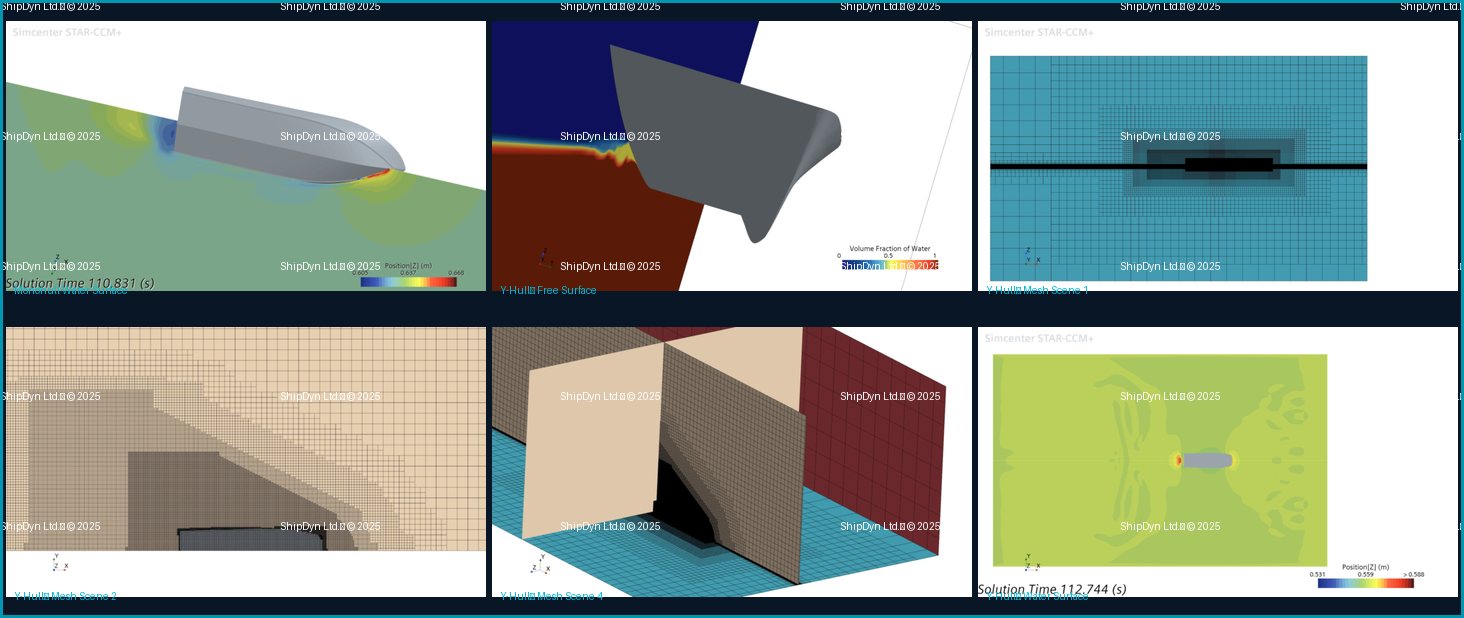
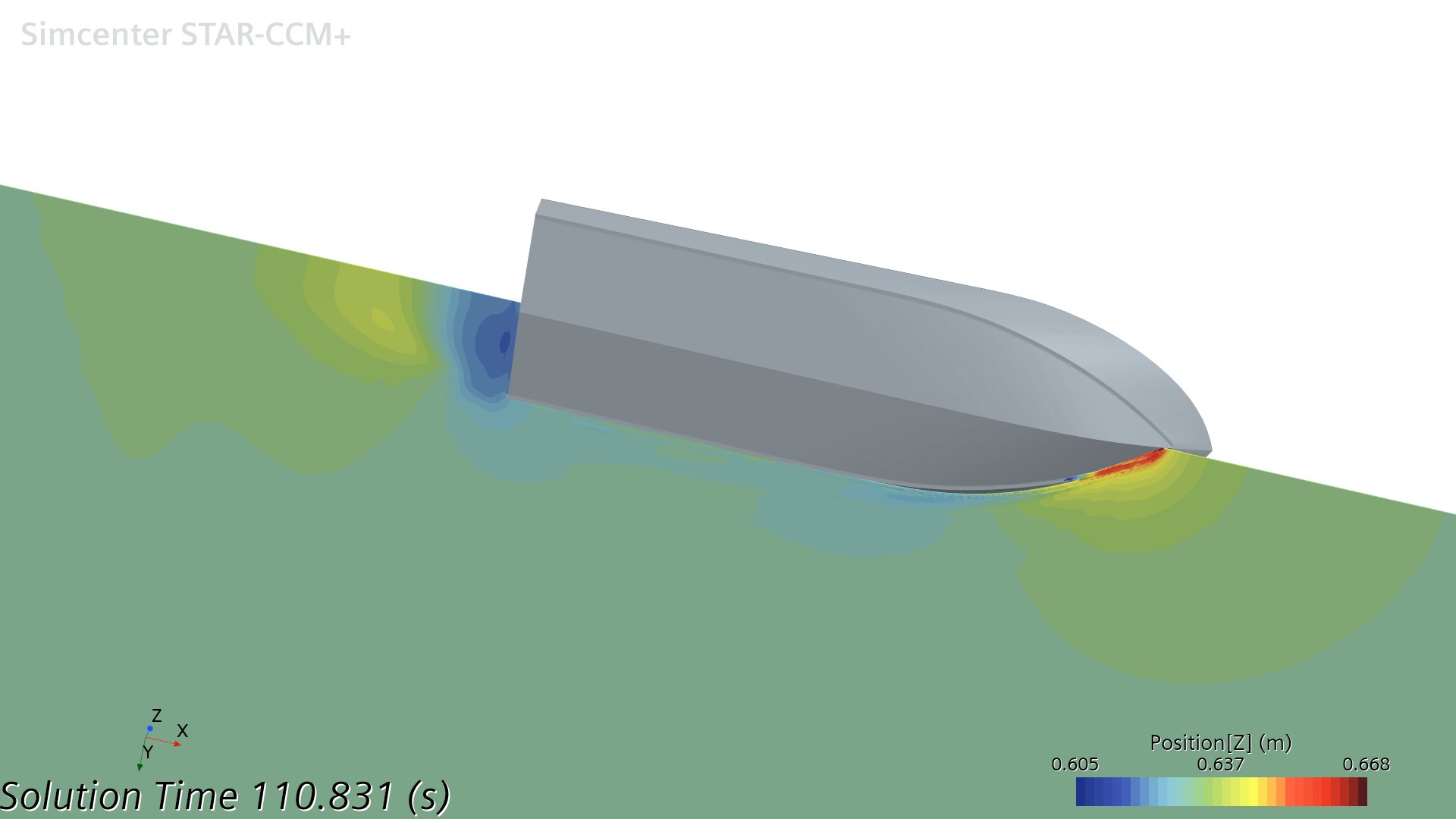
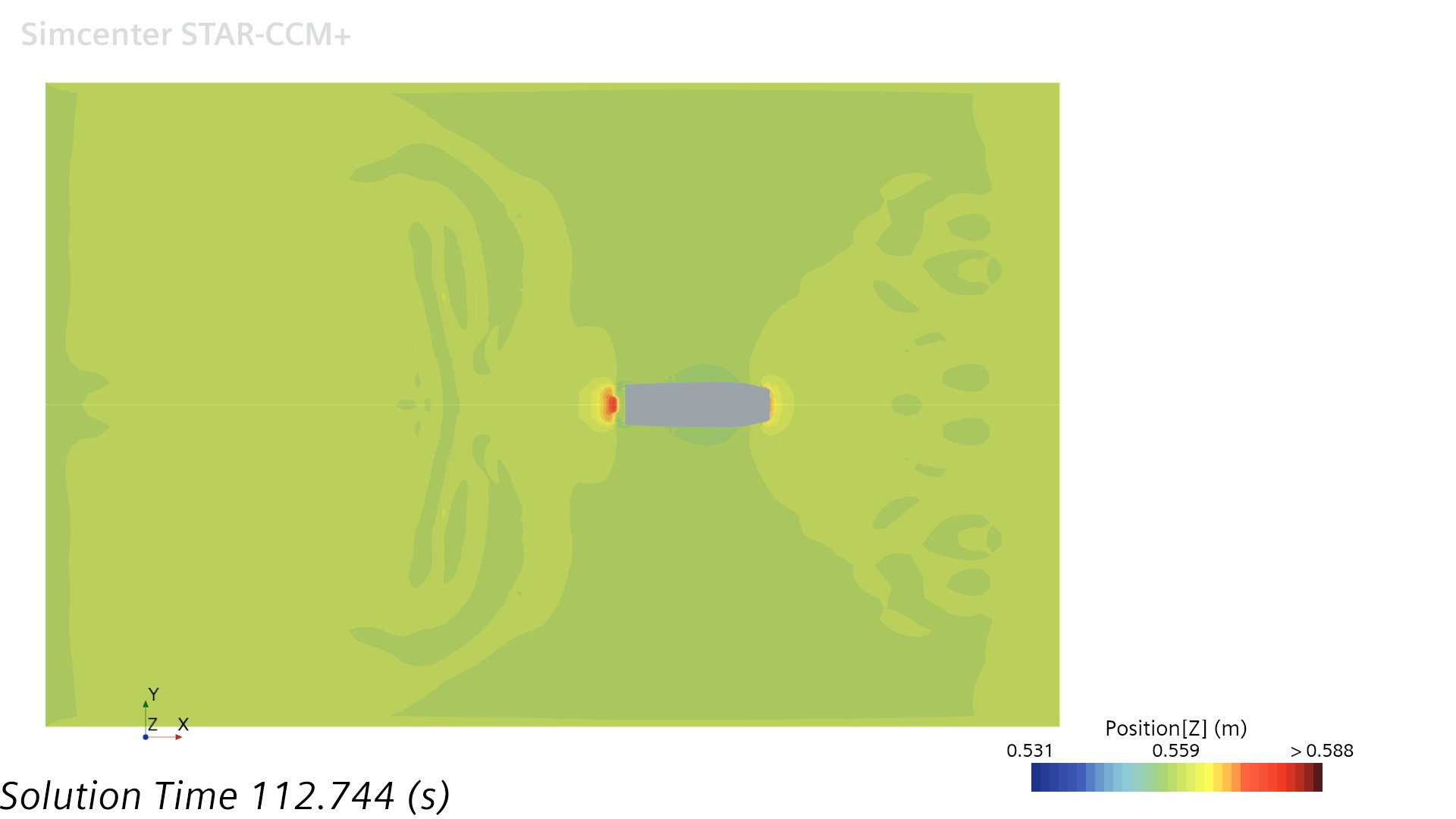
A similar monohull, catamaran and Y-Hull® vessel were designed and analysed under identical conditions. All three hulls share the same vessel length of 13.5 metres and the same displacement of 17.302 tonnes, tested at their respective design drafts. CFD simulations were conducted using Simcenter STAR-CCM+ across Froude numbers of 0.2, 0.3, and 0.4 to evaluate hydrodynamic resistance performance across a range of operating speeds.
Design Overview
Hull Form Description
Y-Hull® is a hybrid hull form featuring twin forward demi-hulls that gradually converge into a single stern hull. The vessel operates with single-shaft propulsion, combining the structural economy of a monohull with the stability characteristics of a catamaran.
Length: 13.5 m · Displacement: 17.302 tonnes · Single-shaft propulsion · Design tested across Fn = 0.2, 0.3, and 0.4 corresponding to a range of operational speeds from slow ahead to full speed.
The Y-shaped geometry creates a natural air channel underneath the hull from bow to stern. At speed, this air layer reduces the wetted surface area in contact with water, lowering frictional resistance passively — without any active air injection systems.
The twin demi-hull bow configuration reduces the bow wave energy compared to a conventional monohull, lowering wave-making resistance — particularly significant at higher Froude numbers (Fn > 0.3).
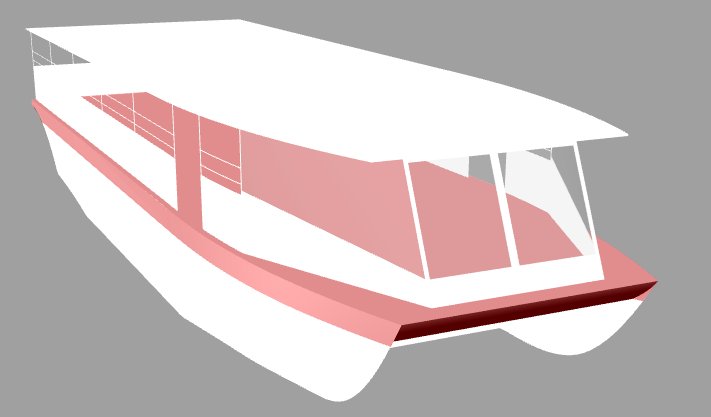
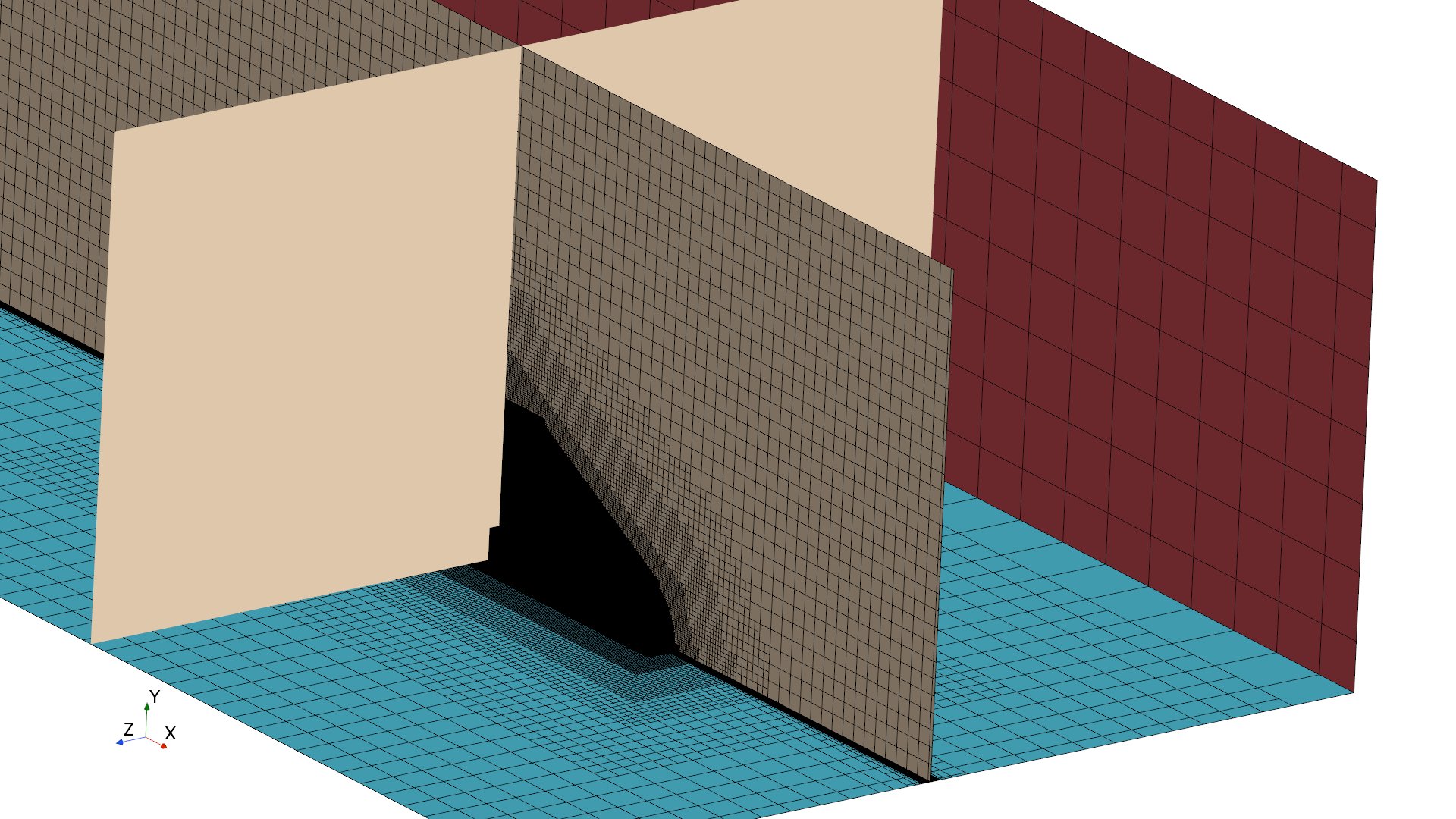
Y-Hull® 3D Geometry & Computational Mesh